
Charles Roe
Industry Adviser
Charles Roe · Industry Adviser

For decades, the mortgage industry worked on a simple assumption: borrowers would repay their mortgage before retirement.
For many people, that remains the goal. But as life expectancy increases, working patterns evolve and financial journeys become more complex, the traditional path from employment to a mortgage-free retirement is becoming less common. Increasingly, people are working later, supporting family members for longer and drawing income from a wider range of sources throughout their lives.
In a recent episode of Living More, Charles Roe, former Director of Mortgages at UK Finance, joined Dan Broadwood to discuss how these societal shifts are reshaping the mortgage market, and what that could mean for borrowers, brokers and lenders in the years ahead.
For previous generations, retirement often marked a clear transition point. Mortgage borrowing was expected to be repaid; employment income came to an end and financial planning shifted towards preserving wealth rather than building it.
Today's reality is often very different.
Many people are continuing to work well beyond traditional retirement ages, either through choice or necessity. Others are running businesses, consulting, managing property portfolios or combining pension income with earnings from employment. At the same time, people may still be helping children onto the property ladder, supporting ageing parents or thinking about how and when to pass wealth on to future generations.
As a result, retirement is increasingly becoming another stage in a customer's financial journey rather than a fixed endpoint. Financial needs continue to evolve, and so too does the role a mortgage can play in helping people achieve their goals.
This shift presents an important challenge for the mortgage industry. If customers are living differently from previous generations, lending solutions need to evolve alongside them.
One of the strongest themes from our conversation with Charles was flexibility.
Historically, mortgage products have often been designed around a relatively straightforward customer journey. Borrowers take out a mortgage, make repayments over an agreed term and gradually reduce their balance until it is repaid in full.
Life rarely unfolds so neatly.
Income can increase or decrease. Family circumstances change. Plans evolve. Priorities shift. What works for someone in their forties may not be the right solution in their sixties or seventies.
That's why flexibility is likely to become an increasingly important part of the mortgage landscape.
Charles suggested we may see a future where borrowers move more easily between different types of borrowing as their circumstances change. A customer might focus on reducing their mortgage balance during their highest earning years, before prioritising lower monthly payments later in life. Others may want greater control over their repayments as they transition into retirement or experience changes in household income.
The common thread is choice.
Rather than expecting customers to fit around rigid product structures, future lending solutions may increasingly be designed to adapt around the changing realities of people's lives.
For many homeowners, their property represents their most significant financial asset.
Historically, conversations around retirement planning have tended to focus on pensions, savings and investments. Increasingly, however, housing wealth is becoming part of a broader financial discussion.
Many homeowners are exploring how their property could help them achieve wider goals, whether that's supporting family members financially, funding home improvements, creating greater flexibility in retirement or gifting wealth earlier in life and seeing loved ones benefit from it.
That doesn't mean accessing housing wealth is the right answer for everyone. Every customer's circumstances are different.
What it does mean is that more people are asking questions about how their home fits into their overall financial plans and looking for advice on the options available to them.
As these conversations become more common, the need for informed advice and tailored solutions will continue to grow.
As customer needs become more varied, the role of the adviser becomes even more important.
Brokers have always been central to helping customers navigate the mortgage market, but the conversations are becoming more nuanced. Clients increasingly need support understanding how mortgages fit alongside pension income, future plans, changing affordability requirements and longer life expectancy.
That creates a significant opportunity for advisers who are confident having these broader conversations.
Rather than focusing solely on a customer's immediate borrowing requirement, brokers are increasingly able to add value by helping clients think about their longer-term objectives and the role their property may play in achieving them.
As the later life lending market continues to evolve, demand for specialist knowledge, holistic advice and a deeper understanding of customer circumstances is only likely to increase.
There is also an opportunity for lenders willing to challenge long-held assumptions.
Too often, borrowers are still defined by their age rather than their individual circumstances. Yet many older borrowers remain financially active, continue to earn income and have strong affordability profiles.
As demographics continue to shift, lenders that take a more rounded view of customers will be better placed to serve people whose circumstances fall outside traditional lending models.
The opportunity isn't simply about lending to older borrowers.
It's about recognising that modern lives rarely fit neatly into conventional definitions of working age, retirement and affordability.
Those who understand that shift will be best placed to support the needs of future generations of homeowners.
At LiveMore, we believe people should have more options as they get older, not fewer.
As longer lives reshape the mortgage market, flexibility is likely to become increasingly important for borrowers, brokers and lenders alike. The challenge for the industry isn't simply adapting to an ageing population. It's recognising that today's customers are living very different lives from previous generations and building solutions that reflect that reality.
The future of lending won't be defined by age.
It will be defined by understanding individual circumstances, adapting to changing needs and helping more people find the right path forward.
Because living longer should mean more opportunities, not fewer.
Charles Roe shares more insights on the future of mortgage lending, longer lives, evolving borrower needs and the role of advisers in a changing market in the latest episode of Living More.
Industry Adviser
Later-life lending insight for intermediaries, straight to your inbox.
By subscribing you consent to LiveMore sending you our insights and updates by email. We'll only use your email address for this purpose. You can unsubscribe at any time using the link in every email. See our Privacy Policy for how we handle your data.

The later life lending market doesn’t need another conversation about whether things should change. The real question is how we start making that change happen.
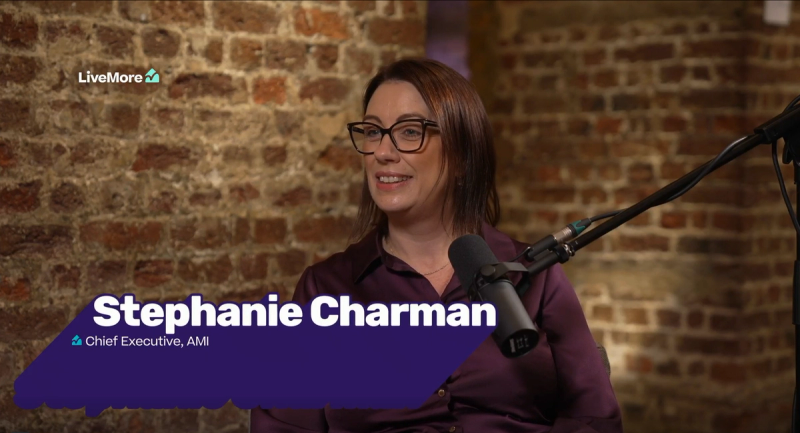
Following our Living More debate at the RSA, Steph Charman, Chief Executive of the Association of Mortgage Intermediaries, joins us to discuss what needs to change across later life lending.

When LiveMore brought together industry leaders for the Later Life Lending is Dead. Or Is It? panel at the RSA, one message came through loud and clear: the way we talk about lending may need to change.